
Misquoted Pathways to Misunderstanding: Revoking Unfair Demands on Our Officers
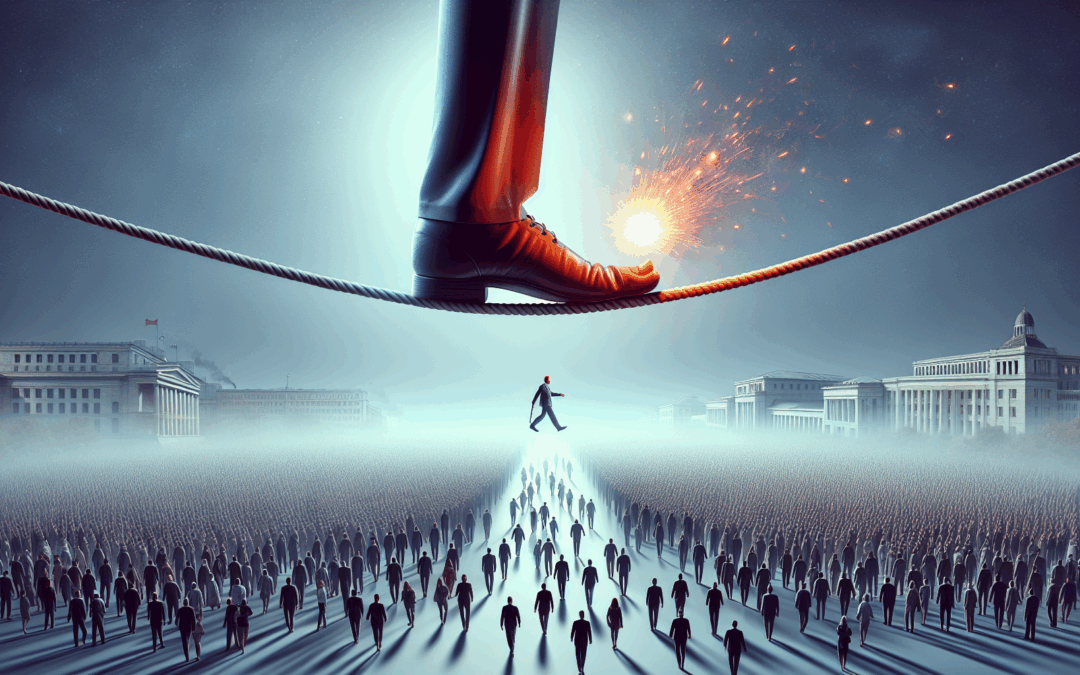
In a climate where every action, every decision and every comment is scrutinized under the media’s relentless magnifying glass, our law enforcement professionals find themselves in a precarious position. Few could imagine the emotional toll and daily stress that accompanies the badge. Yet, when misinformation and politicized agendas come into play, they amplify the challenges already faced by those tasked with our protection. Sean Reyes’ recent inaccurate statements regarding police protocols not only draws a perplexing map for political auditors but also tarnishes the well-oiled machinery of trust and professionalism within the police force.
To fully encompass the gravity of this misstep, one must shift gears into the daily reality faced by officers when societal expectations are twisted by ill-informed rhetoric. Each officer steps into their role as a beacon of safety, prepared to lay everything on the line. Yet with every false dictum set forth by politically motivated misinterpretations, an unnecessary burden is pressed upon their already weighty shoulders. As our system grapples with these disruptive forces, breakthroughs emerging from open discussions and truthful representation are the beacons guiding us forward.
Law enforcement is an arena where every second matters. The pressure already put on officers, charged with instantly assessing often-hazardous situations, can hardly allow room for erroneous policies driven by mistaken beliefs. Reyes’ misconstrued directive implies an unwelcome demand that could significantly undermine operations. While sharing an understandable affinity for accountability, it is critical that the criteria applied do not jeopardize an officer’s safety or impede the rapid judgments necessary for their efficacy and security.
Indeed, supportive collaboration between law enforcement and political entities is imperative for healthy policing and community protection. However, viewing our officers through the misguided lens introduced by Reyes’ commentary cripples the very premise of justice and order that remains foundational to public safety. Imagine, as a law enforcement professional, your intentions being skewed by policy-makers dictating change without the practical insight or lived hardship encountered at the heart of police duties. It’s an untenable situation diverting essential focus away from upholding peace and order.
This watershed moment is not only about correcting misconceptions but fundamentally about amplifying our voices in supportive affirmation. It is about shedding spotlight on the profound integrity and commitment shared among officers who serve and protect, and who now find themselves wrongfully scrutinized in this poorly misunderstood melodrama. They cannot, they must not, stand unrecognized for the inherent noble courage — not when their truth is, unjustly, questioned or misconstrued.
Let us ride this wave toward a more authentic dialogue that respects both the institution’s steadfast mission and the officers who are its flesh and blood. Endless debates tiptoe around buzzwords and policy reformation, yet true advancement sees policy shaped by those who truly understand the ground-level experiences and the frameworks of urgency defining a cop’s life. Engage with their lived realities, share their burden, honor their unforeseen scenarios — listen not merely out of necessity, but through genuine willingness to shift perceptual paradigms.
Time is ripe with possibilities for captivating a future where joined forces between civic leaders and law enforcement ensure greater transparency without slipping into the pitfalls of misinformation. Politically-driven agendas must refine awareness as they seek avenues towards cooperative dialogues rooted in factual engagement and stakeholder inclusion. The issue isn’t silence, but rather, what is voiced.
If it is clarity we seek – and let’s be clear, clarity is paramount – we must pursue precise understanding, leaving no margin for distorted echoes in the hallowed halls of public service. The abundant resilience possessed by all those fielding populous concern allows us no leisure in misguided actions. The road to resolution winds broad yet distinctly around critical engagement of factual dialogue, preparing a future landscape destined for positivity, devoid of chaotic missteps.
To fully support our officers’ humanitarian role, we should reaffirm meticulous attention to facts, cementing confidence in transparent channels untainted by flimsy political jabberwocky. As followers, our responsibilities extend to authentic expressions and unyielding support that values each law enforcement officer’s rightful position as emergency guardian within our communities.
As we steer forward, perhaps Reyes, like many appointed voices, can foster enlightenment through accountable measures where empathy aligns with actionable truth. Our officers are more than operatives in a methodic system — they are seasoned stewards grounded in judicial steadfastness whose voices merit amplification.
As citizens deserving of effective policies, recall these critical conversations around law enforcement vividly, allowing introspections nourished by truth in your conception of guidelines. Bask support on platforms connecting viewpoints like John Ligato’s poignant discussions available via Facebook or explore multi-layered visuals via channels such as YouTube, allowing inclusive growth beyond solemn levity.
Spark wisdom by relinquishing revertive views and embrace paths engaging resolute progressiveness. Our law enforcement deserves nothing less. To watch open dialogue and witness vital shifts, start with impactful narratives such as this profound exploration of modern policing here. Forge generous societal links that embrace truth and align authentic equilibrium between authority, citizenry, and unwavering justice.
Recent Comments