
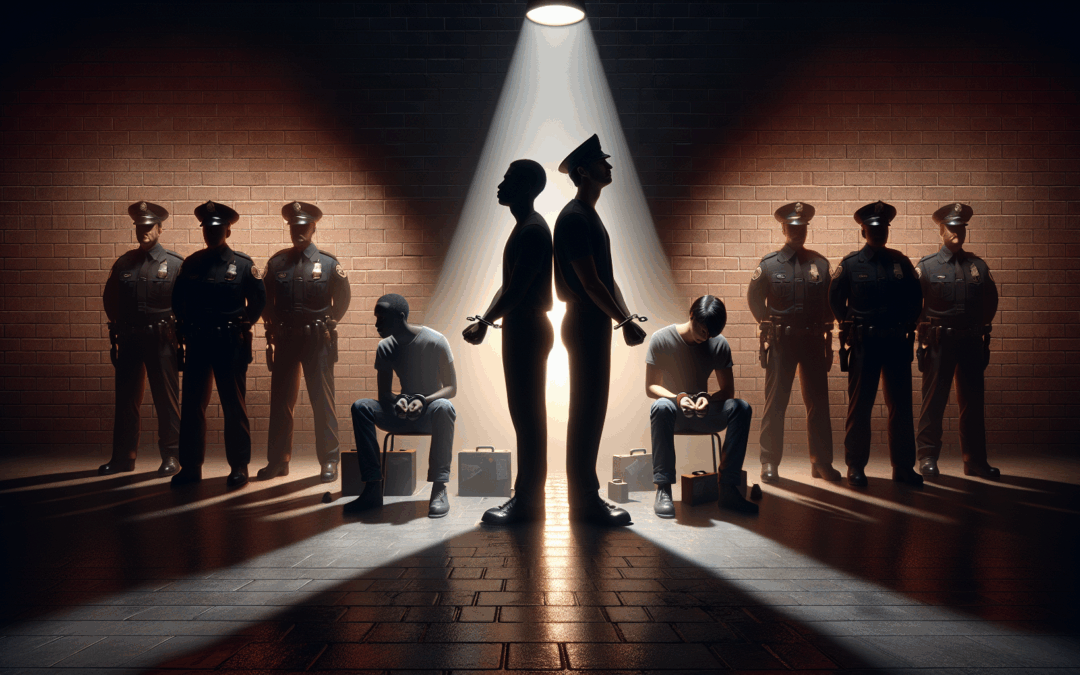
Navigating the Line: Law Enforcement’s Fight for Balance
In our nation, the conversation around law enforcement and civil liberties is continuously evolving, challenged by new incidents that capture public attention. The arrests that recently transpired at Oklahoma City University serve as a fresh point of contention and reflection, highlighting the intricate dance between preserving public safety and defending individual rights. Lieutenant Mark LeDoux, whose perspective offers a rare glimpse into the heart of this complex dynamic, provided insights into this delicate balance on The John Ligato Show.
The Unseen Weight of the Badge
We are often reminded that behind every law enforcement officer is a professional tasked with one of society’s most challenging jobs. For Lieutenant LeDoux and his colleagues, the badge represents an oath to serve and protect—a mission that demands both strength and sensitivity. Carrying this weight involves constant awareness of their community’s needs and an understanding of the diversity of the environments they operate within.
Comprised of layers both visible and invisible, each patrol is charged with maintaining order, fostering trust, and, crucially, ensuring that justice is served without prejudice. This responsibility forms the core ethos of law enforcement officers, tethering them to accountability and integrity as they navigate every call to action.
The Incident that Sparked Debate
The recent arrests serve as a vivid illustration of the complexities officers like Lieutenant LeDoux face daily. During an identity check—a routine yet pivotal procedure aimed at maintaining campus safety—two individuals failed to comply. This refusal escalated into an arrest. While the simplicity of an ID request belies its significance, to law enforcement, it’s a vital mechanism for ensuring the security of both students and faculty.
The public’s reaction to this incident exemplifies the passion with which communities discuss civil liberties. Where some see necessary security measures, others fear a step toward overreach. Lieutenant LeDoux acknowledged this dual-edged reality, explaining that while the primary focus is safety, each action taken becomes part of a broader narrative about personal freedom and governmental authority.
A Nuanced Profession Demands Nuanced Solutions
Not every encounter can adhere strictly to policy without consideration of human factors, and Lieutenant LeDoux conveyed this dichotomy with sincerity. Decisions made in moments of tension require not just adherence to protocols but empathy and discernment, qualities frequently overshadowed in public discourse. Policing necessitates a walk along a precarious line—upholding the law while ensuring relationships with the community remain grounded in respect and mutual understanding.
Educating for Empathy and Effectiveness
Community concerns cannot be dismissed, and in recognizing this, Lieutenant LeDoux champions transparency and education. Law enforcement efforts include initiatives to invite open dialogue between the police and the people they protect—aiming to demystify police procedures and build a reservoir of trust. These programs are envisioned as bridges, enabling both sides to voice concerns and desires, and forging positive pathways forward.
For instance, forums outlining the necessity of compliance during police interactions form one part of a bigger effort to educate both students and residents about the broader implications of their rights. Such transparency in justice helps mitigate misconceptions, opening the floor for inquiries, fears, and discussions regarding what constitutes proper conduct on both sides.
Policing in the Public Eye
As public scrutiny of police practices amplifies through digital platforms and social media, officers are increasingly aware of their visibility. Cameras can capture moments designed to be understood in the blink of an eye yet lasting lifetimes in reputation. Lieutenant LeDoux addresses this reality by emphasizing continued training for himself and his officers on best practices for modern policing.
Although policies can be improved upon and procedures refined, the commitment of officers to uphold justice transcends any one moment captured on film. It is a commitment exemplified by acts not always broadcast or acknowledged—like mentoring youth, assisting motorists in distress, or providing a presence at community events. The genuine intent of law enforcement endeavors must shine through in these everyday gestures.
Moving Forward: Solutions and Hope
The evolving relationship between police and citizens calls for introspection, direct communication, and a renewed understanding of shared goals. Lieutenant Mark LeDoux’s reflections transmit valuable lessons—acknowledging that the quest for balance in law enforcement is perpetual and requires committed engagement from every individual involved in this environment.
Encounters such as this epitomize the persistent testing ground for legal, ethical, and personal interpretation. If there’s one takeaway from the discourse surrounding these arrest stories, it is this: while policies form the backbone, the heart of policing is built on humane connections. Building lasting trust and effective policing is possible through cooperative growth from both officers and the citizens they vow to safeguard.
For further insights into law enforcement perspectives and to join the ongoing conversation, watch the full discussion on The John Ligato Show and follow their updates on Facebook. Engaging in these discourses equips us to come together, ensuring our communities are safe spaces where rights and freedoms are not just respected but celebrated in unanimity.
Recent Comments