
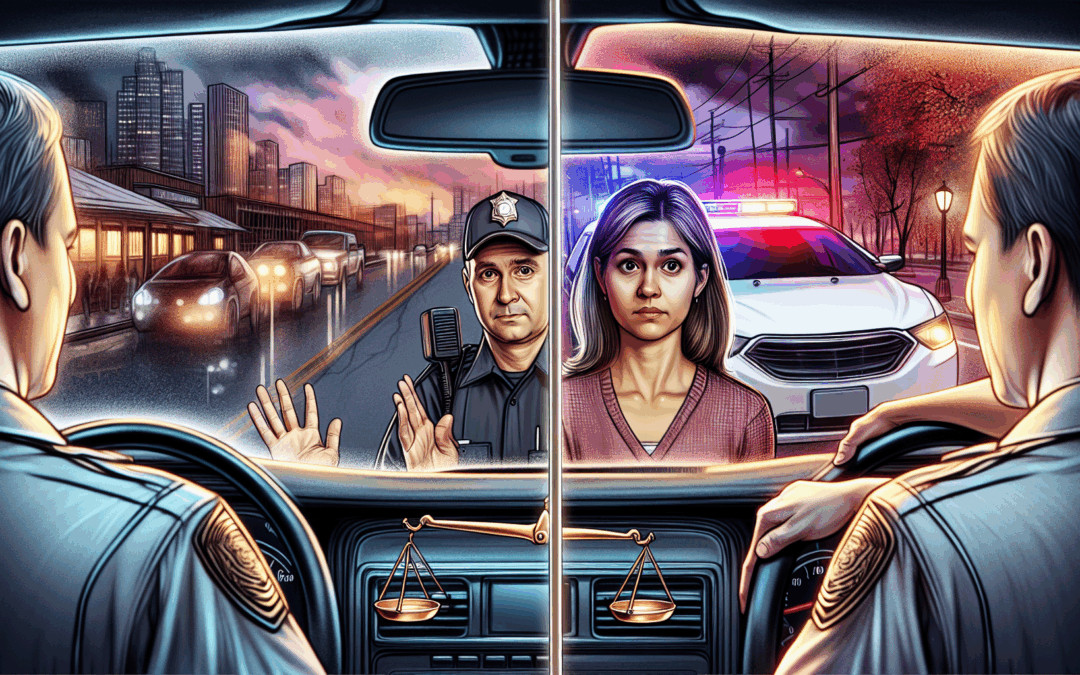
Living the Badge in an Age of Scrutiny
For law enforcement officers, the badge is more than a symbol of authority; it is an emblem of commitment to the communities they serve. In an age where every decision is scrutinized under the magnifying glass of public opinion, these officers stand at the nexus of duty and expectation. Behind the veil of news stories and viral videos are human beings, each equipped with the same vulnerabilities, strengths, and desires as the civilians they protect.
In an environment where the line between keeping the peace and infringing on freedoms is increasingly unclear, traffic stops have become a remarkably tense stage. When an officer approaches a vehicle on the side of the road, countless variables come into play. What should be a simple duty suddenly becomes a tableau of uncertainty and unpredictability. These are not just scenarios of regulation or enforcement but reflect deeper undercurrents in society’s ongoing dialogue about rights and the way they are preserved.
More Than Just a Routine Stop
To the uninformed observer, a traffic stop might appear as nothing more than a punctuation mark in the drudgery of daily life. Yet for an officer, it is a moment of heightened awareness, an activation of training, intellect, and human intuition. Each interaction is an opportunity to engage citizens, enforce law, and simultaneously navigate the murky waters of public expectation and personal safety.
Officers are rigorously trained to assess threats, read subtle social cues, and de-escalate tense situations, all within seconds of initial contact. This level of vigilance is not always instinctive but must often be cultivated through experience on the job. It is a form of resilience forged in the grit and sinew of daily service.
When stepping out of a cruiser, there could be an internal echo: “Will I make it home today?” It is a question that encapsulates the fears faced by anyone who carries the weight and responsibility of wearing a uniform. It is a reminder that, while they are charged with imposing safety, officers are not immune to the same frailties or fears that govern us all.
The Spectrum of Human Interaction
While we search our conscience for what it truly means to be an enforcer of the law, it’s pivotal to remember the vast spectrum of interactions that officers have with the public. While the headlines may gravitate towards exceptional or controversial stops, for every interaction that invites scrutiny, thousands more exemplify compassion, understanding, and goodwill.
Consider the officer who checks on stranded motorists, ensuring their safety by offering aid or a simple call for help. Think about the compassionate listening ear extended to a frantic parent explaining why they were speeding to reach their ailing child’s side. These stories seldom penetrate the public consciousness but are the bread and butter of everyday policing. Where media may disseminate chaos, policing also builds peace quietly in less documented, yet profound ways.
Bridging the Divide
Maintaining an environment where law enforcement can operate effectively demands a reciprocal relationship with the public built on foundations of trust and respect. It is a circuit that powers societies when optimized by community engagement. While expectations on both sides might vary, acknowledgment of mutual humanity is critical for progress.
Programs that invite officers into community settings to converse outside of duty-dictated circumstances have begun to breach perceived divisions. Initiatives like coffee meetings with cops, local youth cadet programs, or community watch meetings which embrace law enforcement invite genuine, human understanding. Reinforcing positive encounters outside obligatory scenarios fosters an environment where skepticism can be transformed into shared grievances and aspirations.
Commitment to Change and Better Practices
As we’ve stepped further into an age where technology dynamically influences societal functioning, law enforcement has begun to adapt to this new era by embracing transformative practices. Innovations such as body-worn cameras provide both transparency and accountability, contributing support to the reliability of police procedures.
Moreover, ongoing professional development opportunities for officers focusing on thought-provoking discussions and skill enhancement in communication, psychology, and diversity train officers to de-emphasize force wherever possible. These initiatives reflect a willingness by policing agencies to evolve and adapt, guided by principles and practices that garner community trust and cooperation.
Conclusion
In conclusion, traffic stops have become a visceral experience that encapsulates not merely an intersection of enforcement but also of public conscience. We owe it to those who dwell on both sides of these interactions to view them through lenses refined by empathy and intellect. Acknowledging officers’ crucial role provides a link to understanding wider societal expectations while opening doors of conversation needed for meaningful community integration.
Regardless of where you stand on these debates, there is one unassailable truth: unity and trust are potent force-multipliers desired by community and law enforcement alike. Together, through understanding and cooperation, these divides can be bridged, leading us collectively to towards a future where safety and the sanctity of rights coexist harmoniously.
For more on these pertinent discussions, visit The John Ligato Show for unfiltered insights or follow its social updates on Facebook. You can also check out an enlightening episode tackling these dimensions here.
Recent Comments